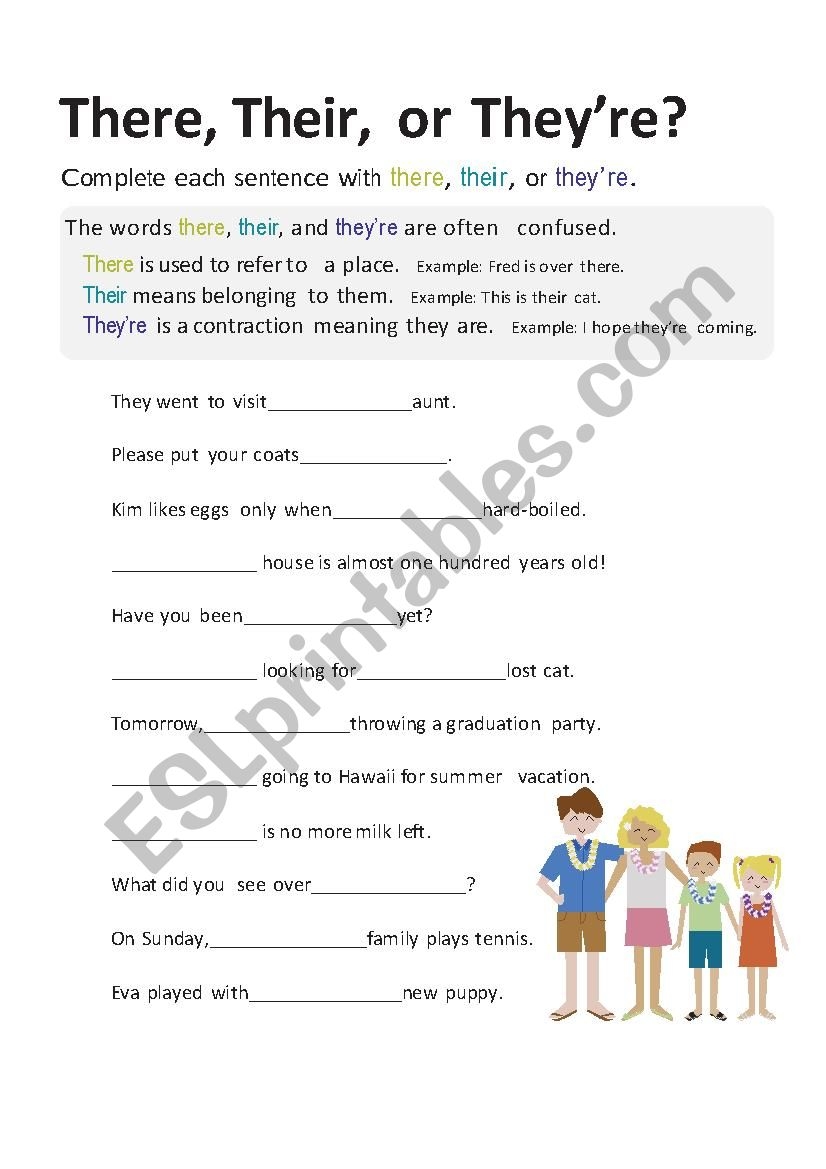
Many people struggle with the differences between there, their, and they’re. These three words may sound similar, but they have distinct meanings and are used in different contexts. Understanding when to use each one can help improve your writing and communication skills.
It’s important to know that “there” is used to refer to a place or location. For example, “The book is over there on the shelf.” On the other hand, “their” is a possessive pronoun used to show ownership. For instance, “The students forgot to bring their books to class.”
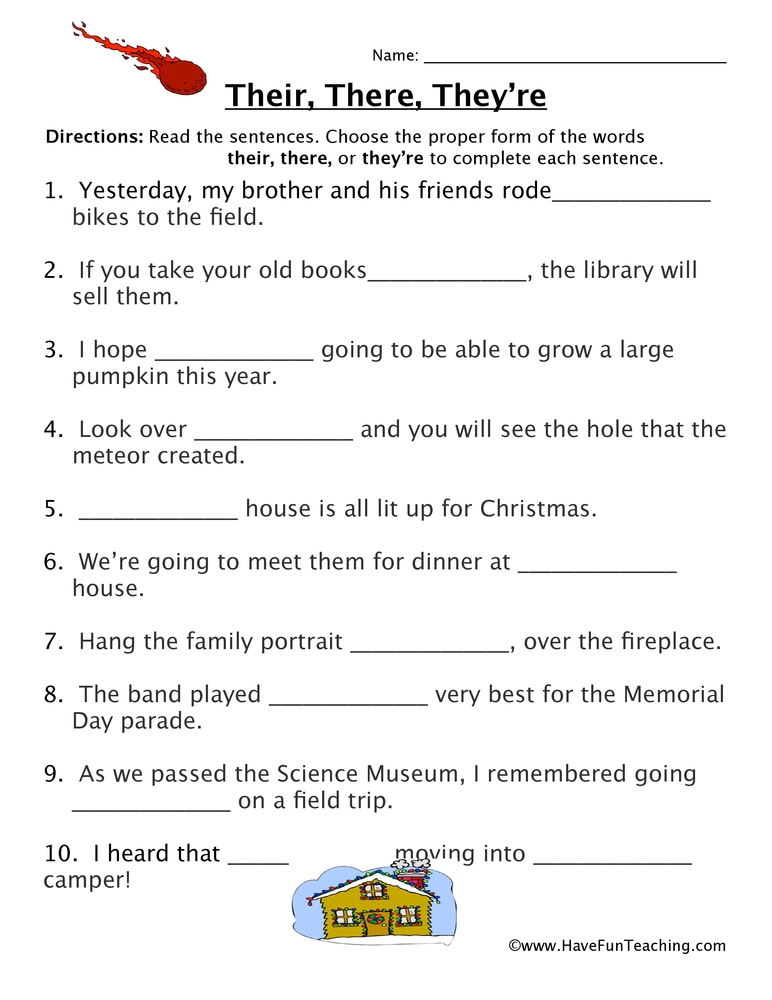 There Their They’re Worksheet
There Their They’re Worksheet
To help you practice using there, their, and they’re correctly, you can use a worksheet. These worksheets typically provide sentences with blanks where you have to fill in the correct word. This can help reinforce the differences between there, their, and they’re and improve your grammar skills.
When completing the worksheet, pay attention to the context of the sentence to determine which word is appropriate. Remember that “there” refers to a place, “their” shows possession, and “they’re” is a contraction for “they are.” With practice, you will become more comfortable using these words correctly in your writing.
Additionally, it can be helpful to read examples of sentences using there, their, and they’re to see how they are used in context. This can give you a better understanding of when to use each word and help you avoid common mistakes in your writing.
By using a worksheet and practicing with examples, you can improve your understanding of the differences between there, their, and they’re. This will not only enhance your writing skills but also improve your overall communication abilities. With time and practice, you will feel more confident using these words correctly in your everyday writing.
In conclusion, understanding the differences between there, their, and they’re is essential for effective communication. By using worksheets, practicing with examples, and paying attention to context, you can improve your grammar skills and avoid common mistakes. Remember to keep practicing and seeking feedback to continue improving your writing and communication abilities.