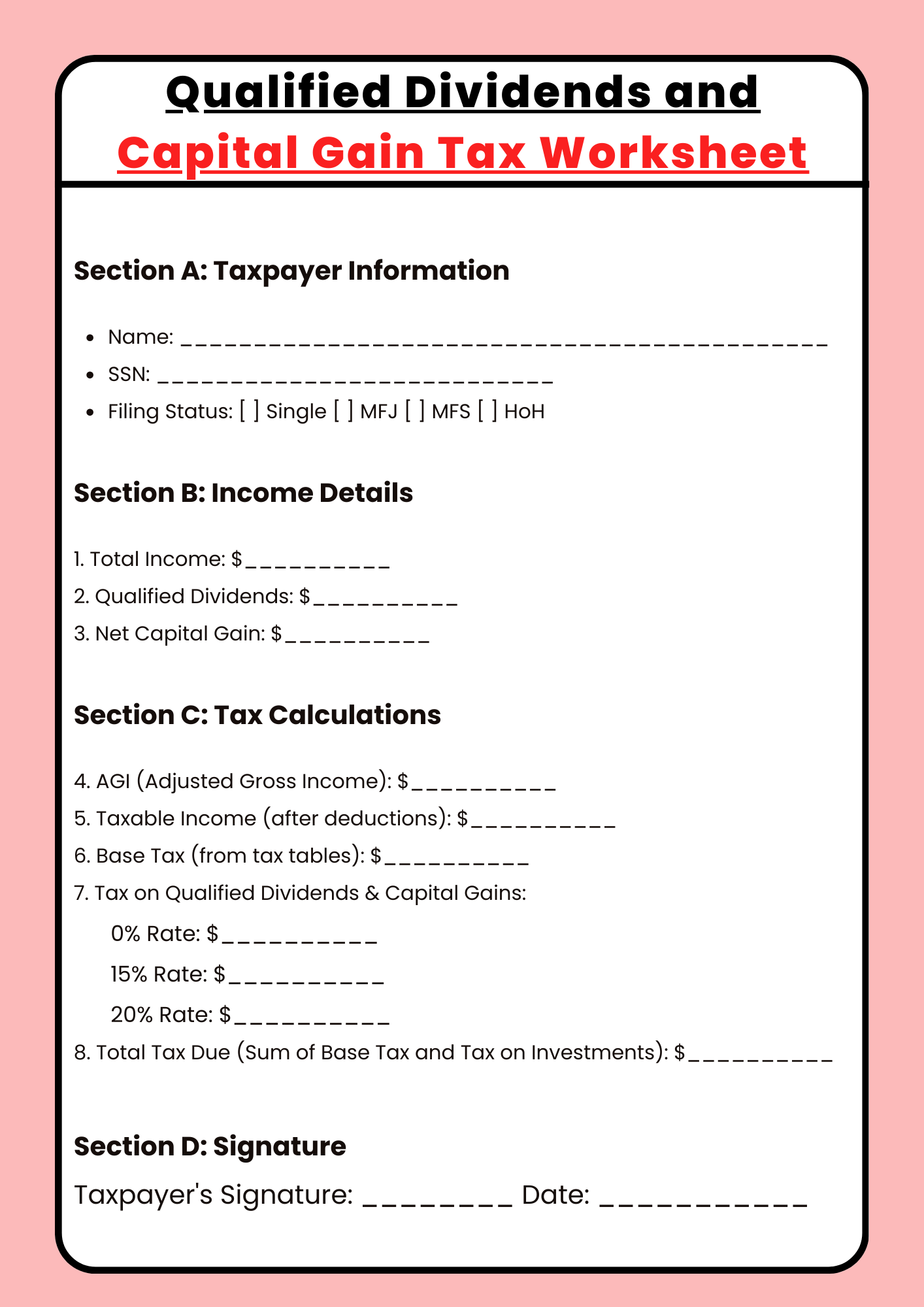
When it comes to filing your taxes, understanding the Qualified Dividends Capital Gains Worksheet is essential. This worksheet helps you determine the tax rate you will pay on your qualified dividends and capital gains, which can have a significant impact on your overall tax liability.
Qualified dividends and capital gains are taxed at a lower rate than ordinary income, making them an attractive investment option for many taxpayers. To calculate the tax on these types of income, the IRS provides a worksheet that helps you determine the correct tax rate based on your filing status and total income.
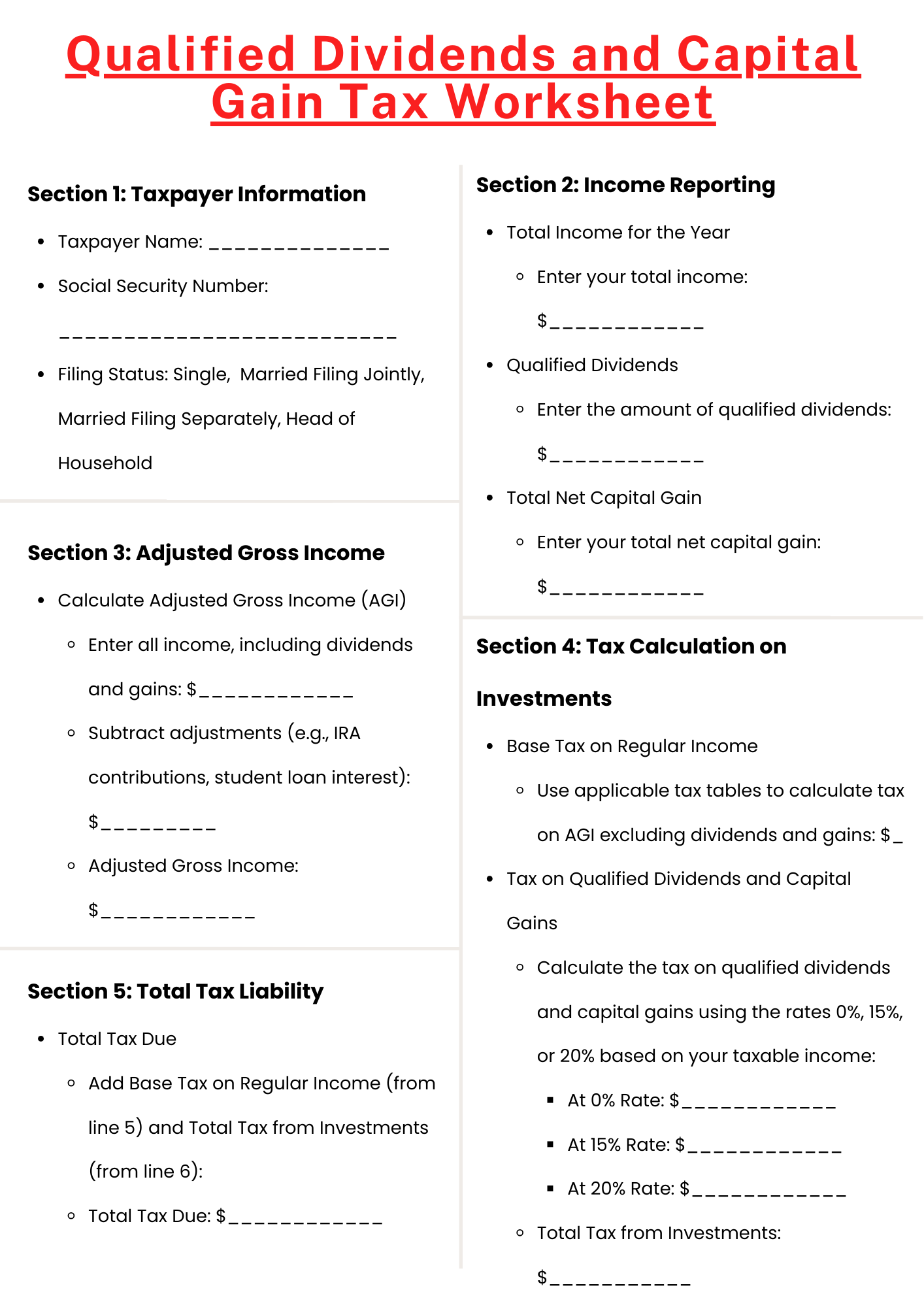 Qualified Dividends Capital Gains Worksheet
The Qualified Dividends Capital Gains Worksheet takes into account various factors, such as your filing status, total income, and the amount of qualified dividends and capital gains you have received. By following the instructions on the worksheet, you can calculate the tax rate that applies to your specific situation.
It’s important to note that not all dividends and capital gains qualify for the lower tax rate. To be considered qualified, dividends must meet certain criteria, such as being paid by a U.S. corporation or a qualified foreign corporation. Similarly, capital gains must be from the sale of certain assets, such as stocks or real estate, held for a specific period of time.
By using the Qualified Dividends Capital Gains Worksheet, you can ensure that you are accurately calculating the tax on your qualified dividends and capital gains. This can help you minimize your tax liability and make the most of these investment opportunities. Be sure to consult with a tax professional if you have any questions or need assistance with completing the worksheet.
In conclusion, the Qualified Dividends Capital Gains Worksheet is a valuable tool for determining the tax rate on your qualified dividends and capital gains. By understanding how to use this worksheet, you can make informed decisions about your investments and optimize your tax strategy. Take the time to review the worksheet and ensure that you are taking full advantage of the lower tax rates available for these types of income.